
On 10 June, the Kazakhstan Alatau New City China Roadshow was held in Shenzhen. Hosted by the Alatau City Authority and supported by the Embassy of Kazakhstan in China, the Ministry of Transport, the Ministry of National Economy, and the Ministry of Digital Development, Innovation and Aerospace Industry, the roadshow was attended by a delegation led by Kazakh Deputy Prime Minister Bozumbayev, alongside representatives from Chinese enterprises including Shenzhen Urban Transport Planning Center Co., Ltd. (hereinafter referred to as "SUTPC"). Yang Shuai of SUTPC International was invited to attend, signing a Memorandum of Understanding on behalf of SUTPC with the Alatau City Authority (ACA), and delivered a presentation on integrated solutions for new cities and Central Asian practice cases during the "Smart Cities" thematic session.
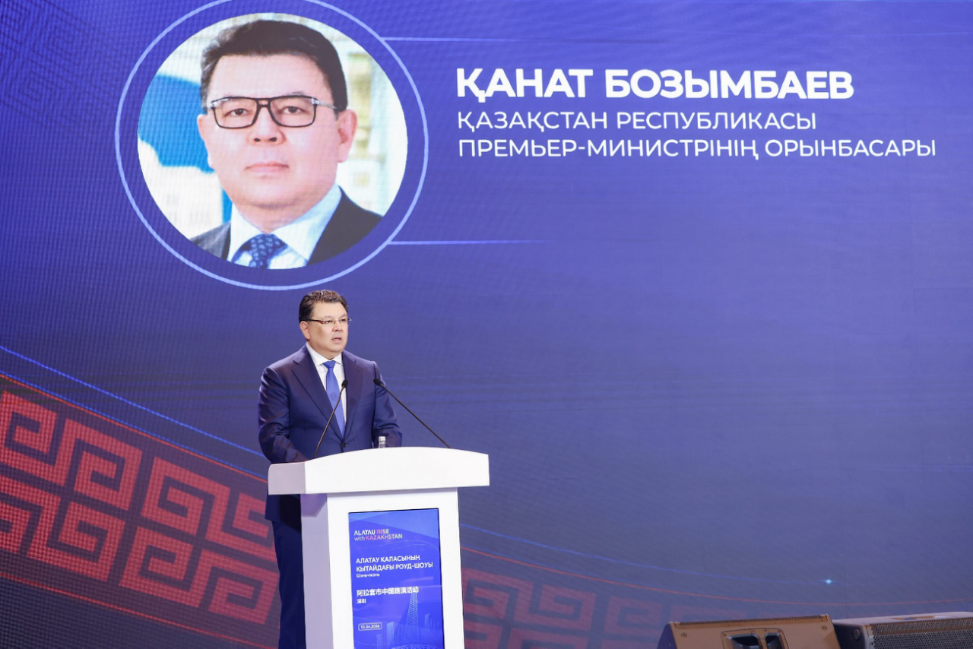
Deputy Prime Minister Bozumbayev delivering a speech
Alatau New City is a national‑level strategic project of Kazakhstan, positioned as a modern new city integrating national governance, digitalisation, industry, logistics, and urban infrastructure. In the presence of guests and attendees, SUTPC and the Alatau City Authority formally signed the Memorandum of Understanding. The two sides will conduct practical cooperation in areas including digital twin infrastructure, low‑altitude economy applications, transportation‑energy integration pilots, and technical training and capacity building. Deputy Prime Minister Bozumbayev stated in his address: "Shenzhen is a benchmark for urban transformation globally. We hope to make Alatau the 'Shenzhen' of Kazakhstan."
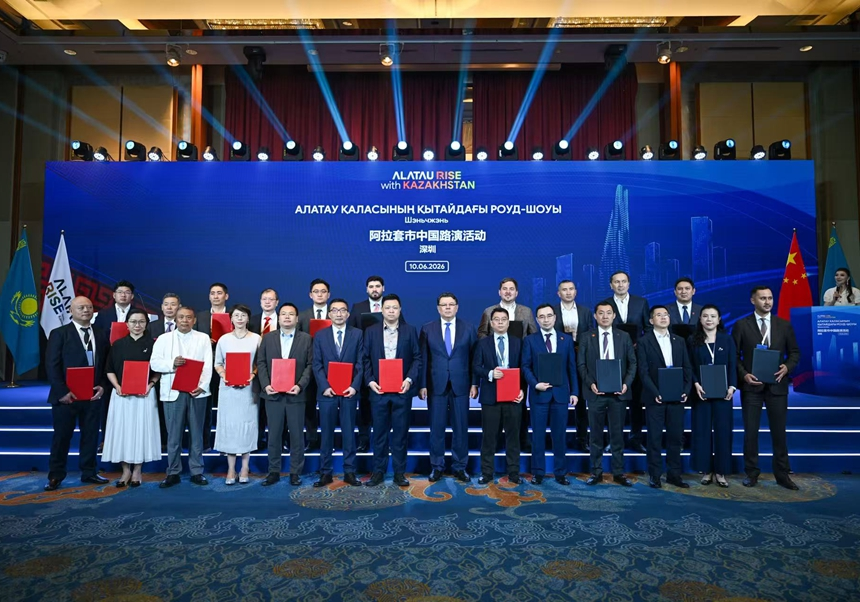
Deputy Prime Minister Bozumbayev posing for a group photo with SUTPC and other signing companies

Yang Shuai of SUTPC International delivering a thematic presentation
During his presentation, Yang Shuai systematically introduced SUTPC's full‑lifecycle integrated solutions for new cities and its implementation experience in Central Asia, focusing on three directions: digital twins, low‑altitude economy, and transportation‑energy integration. In digital twins, leveraging the self‑developed TransPaaS intelligent transportation operating system, SUTPC builds a CIM+ digital foundation covering planning, construction, management, and operations. In the low‑altitude economy, concentrating on low‑altitude airspace management, drone logistics, and urban air mobility, SUTPC has already secured its first project in the Central Asian market. In transportation‑energy integration, aiming to reduce transport‑related carbon emissions and achieve efficient energy utilisation, SUTPC promotes the development of a green and low‑carbon transport system. Yang Shuai noted that SUTPC has developed replicable "platform + equipment + service" export capabilities across Southeast Asia, the Middle East, and Central Asia, and looks forward to deeply integrating Shenzhen's smart city development experience with the actual needs of Alatau.
The signing of this Memorandum of Understanding marks another strategic move by SUTPC in the Central Asian market, following its low‑altitude economy project cooperation with Alatau Advanced Aviation Group, and constitutes an important step forward in the company's strategy of "global reach from an international headquarters". Going forward, SUTPC will continue to bring the "digital twin foundation + industry large models + embodied intelligence equipment" China Solution for smart cities to more Belt and Road partner countries and regions.